


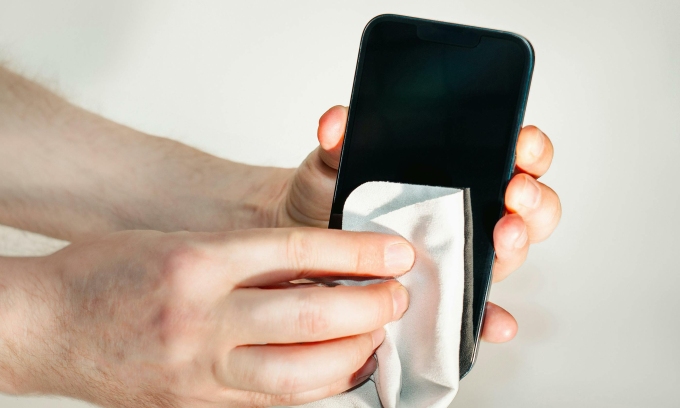
Most users carry smartphones everywhere, including on public transport, in restaurants, and even into toilets. Dr. Meena Jha from Central Queensland University told the Independent that while many people wash their hands several times a day, they often overlook cleaning their phones.
Scientists at the University of Arizona found in a 2017 study that cell phones carry 10 times more bacteria than most toilet seats. A separate 2025 study published by the National Library of Medicine examined 20 mobile phones representing 10 geographical regions worldwide and recorded 2,204 microbial traces, including 882 bacteria, 1,229 viruses, 88 fungi, and five protozoa. Researchers identified 65 distinct antibiotic resistance genes and 86 virulence genes, with plant, animal, and human pathogens among the bacteria detected on mobile phones.
 |
|
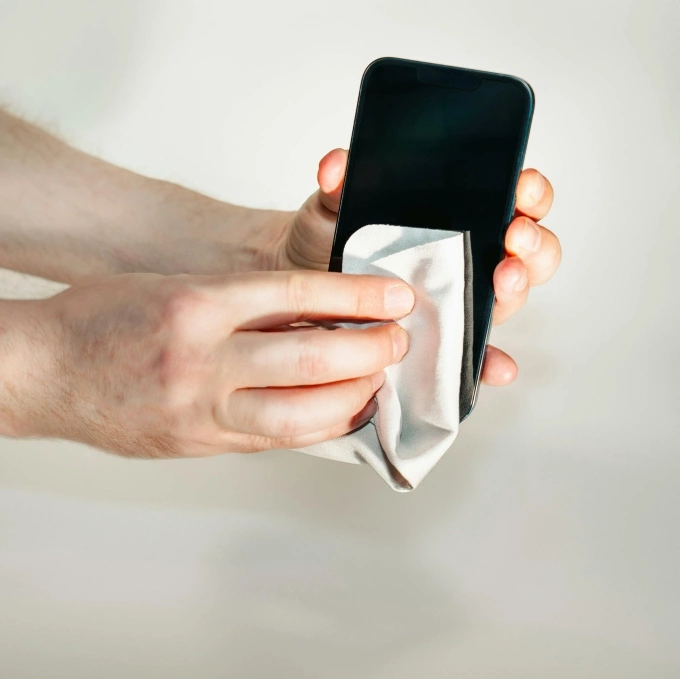
A person cleans a smartphone screen. Illustration photo from Pexels |
According to tech site BGR, cleaning involves both wiping and disinfecting. Users can wipe smartphones daily with a dry microfiber cloth to remove skin oils, dust, and residue. Disinfection, which targets bacteria more thoroughly, is more involved but should ideally be done on a weekly basis.
For stubborn stains or disinfection, BGR recommends slightly dampening a cloth with diluted isopropyl alcohol at about a 50% concentration and gently wiping the device. Ethyl alcohol wipes are another option, though they are less recommended because they take longer to dry. The site advises disinfecting phones after making calls in public places, looking up recipes in the kitchen, or using phones in toilets.
Experts warn that incorrect methods or materials can damage devices, particularly for users who clean frequently. Strong chemicals can erode the screen’s protective coating and seep into openings, potentially harming internal components. Both Apple and Samsung advise against using bleach, hydrogen peroxide, vinegar, aerosol sprays, glass cleaners, or high-concentration alcohol wipes above 70%.
Users should avoid abrasive materials on touchscreens, as they can cause scratches. All cleaning materials should be soft, clean, and non-irritating to the skin. Toilet paper, low-quality tissues, and most clothing fabrics are not recommended.
According to CNET, even smartphones with IP67 water resistance or higher, which can withstand immersion for about 30 minutes at a depth of one meter, should be wiped with a damp cloth rather than rinsed under running water. Devices should then be dried with a soft cloth, ensuring all ports and speakers are completely dry. Water resistance is designed for accidental exposure, not for swimming or regular cleaning.
