


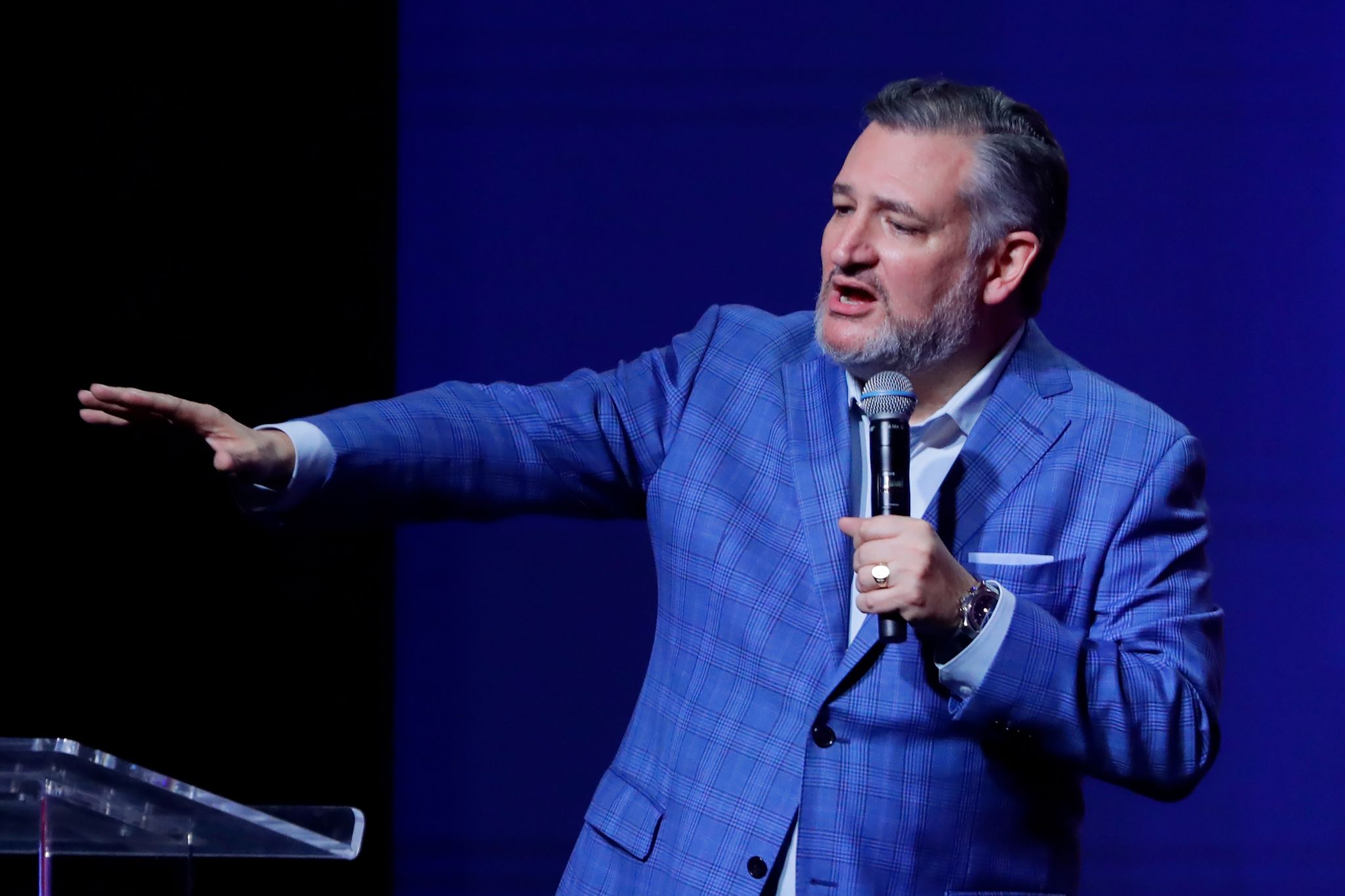
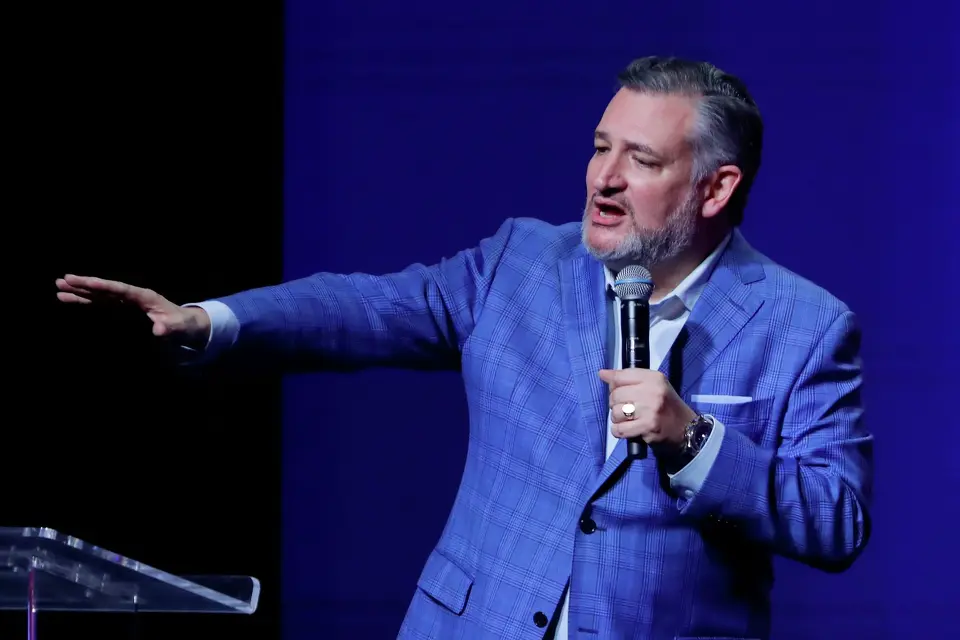
U.S. Sen. Ted Cruz speaks on Charlie Kirk during the first day of the Texas Youth Summit, held at the Waterway Marriott Friday, Sep. 19, 2025 in The Woodlands, Texas.
Michael Wyke/ContributorU.S. Sen. Ted Cruz is leading a congressional effort to overhaul federal protections for tech companies like Alphabet and Meta, taking on a powerful industry he has long criticized for pushing potentially harmful content on teenagers and children, as well as silencing conservative viewpoints online.

Under a 1990’s law written to promote free and open speech online, tech companies cannot be held liable for the vast majority of content that is published on their platform.
Article continues below this ad
Cruz, who
At a recent Senate hearing on the law, Cruz drew attention to a group of parents in the audience whose teenage children had committed suicide following exposure to what their attorney described as “unreasonably dangerous social media apps.”
“I will say, as the father of two teenage girls, you are living every parent’s nightmare,” Cruz said. “I don’t know a parent of adolescents or teenagers who is not terrified of the tragic forces that targeted your children.”
Article continues below this ad
The push by Cruz comes as social media platforms are coming under increasing scrutiny in Washington from members of both parties, especially over the impact their streams of content are having on Americans’ mental health, particularly children and teenagers.
Section 230 has generally protected tech companies from litigation, although several recent cases are testing the limits of the law.
Matthew Bergman, an attorney who won a high-profile court case Wednesday against Meta and YouTube over their allegedly addictive content platforms, cheered the hearing as a sign that
“It’s been so difficult because the palpable harms social media companies have been doing to kids have only recently become evident,” he said.
Article continues below this ad
Asked for comment on Cruz’s efforts, Mike Ward, a senior vice president at TechNet, the advocacy arm of the technology industry, described the law protecting tech companies from litigation as a “cornerstone of the modern internet.” He also said Cruz was an “important voice advancing U.S. innovation” with a “deep understanding of these issues.”
Section 230 “has helped fuel the economic growth and global competitiveness that define the U.S. technology sector,” he said.
Cruz has a complicated relationship with the tech sector.
Article continues below this ad
Since taking over as chair of the Senate Commerce Committee last year, he has drawn attention to the dangers of persistent screen time for children. He also co-sponsored legislation with U.S. Sen. Amy Klobuchar, D- Minn., to require online platforms to pull down pornographic images posted without the participants’ consent – including those generated through artificial intelligence.
At the same time, he has worked with the Trump administration to try and block state-level efforts like those in Texas to regulate the fast-growing AI sector, favoring instead federal regulations that would allow the industry to develop more quickly without having to navigate a patchwork of rules.
While those efforts hit a wall last year in the GOP-controlled Senate, the White House released a proposal for artificial intelligence regulation Friday aimed at bolstering U.S. industry while also creating safeguards for children.
“We expect the White House to work to pass a preemption bill this Congress, and we’re seeing an increasing likelihood that might move through another reconciliation effort,” said Chris Mackenzie, a spokesman for the non-profit Americans for Responsible Innovation. “We have major concerns about the impact on kids and workers and American families, despite what the White House has said.”
Article continues below this ad
The question hanging over Cruz now is how far would he be willing to go to reform protections for a tech industry he describes as vital to national security interests, as China and other nations race to develop AI technology.
He would also need to bring together Democrats and Republicans at odds over how online platforms should manage controversial speech. While Cruz and other Republicans have criticized the sector for silencing conservatives — in particular, public health skeptics during the Covid-19 outbreak — Democrats have called for greater safeguards against misinformation.
But Cruz and Democrats seemed to have found common ground on the dangers social media poses to children and teenagers.
Article continues below this ad
At the Senate hearing U.S. Sen. Brian Schatz, D-Hawaii, accused tech companies of using their federal protection as an “as an excuse to avoid taking meaningful action to protect users, but especially kids, from egregious harms, harassment and abuse, frauds and scams.”
“It’s not that they don’t know it’s happening or why it’s happening. It’s that to do something about it would hurt their bottom line,” he said.
