


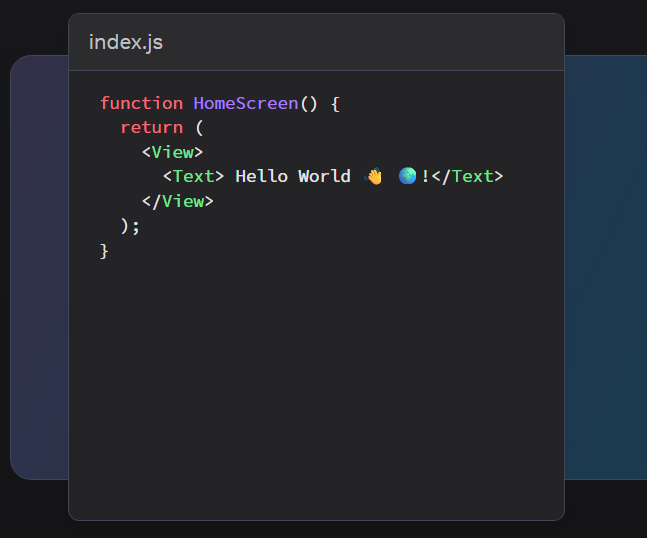
The rise of cross-platform development has made React Native Mobile one of the most influential tools in modern app creation. As an open-source mobile app framework built by Meta, React Native allows developers to build high-performance applications for both iOS and Android using a single JavaScript codebase. This efficiency makes it widely used among startups and tech giants alike.
What Is React Native Mobile and How It Works
React Native Mobile uses JavaScript and React principles to create apps that communicate directly with native APIs. Instead of WebView-based solutions, it compiles components into native views, offering performance and responsiveness similar to native development.
Through a bridge between JavaScript and native code, developers gain access to device features like cameras, sensors, and file storage. This approach blends web development speed with mobile reliability, helping developers maintain consistency across operating systems.
Why Use React Native for iOS and Android Apps
React Native’s main strength comes from having a single codebase for both platforms, reducing time and cost. Developers can deploy feature updates instantly without duplicating work. Additionally, React Native supports vast libraries maintained by the open-source community, expanding creative possibilities for app customization.
Many successful apps, from social platforms to e-commerce tools, use React Native for its scalability and active ecosystem. It offers smooth performance while letting developers reuse logic and design elements between iOS and Android.
React Native vs Other Mobile App Frameworks
Compared with rivals like Flutter, Ionic, and Xamarin, React Native provides a balance of simplicity, speed, and native capability. Flutter requires mastery of Dart; Ionic often relies on web rendering; Xamarin integrates with Microsoft tools but lacks cross-platform UI consistency.
React Native, built on JavaScript, benefits from broad developer familiarity. It delivers near-native results while still allowing inclusion of native modules for demanding features. This versatility positions it as one of the most adaptable frameworks in mobile development today.
Setting Up the React Native Environment
To begin, developers need Node.js, Java JDK, Watchman, Android Studio, and Xcode for iOS builds. Once installed, they can choose between Expo CLI and React Native CLI for project setup.
Expo CLI offers ease of use with minimal configuration, perfect for beginners or rapid prototyping. React Native CLI grants full control over native modules and settings, making it ideal for larger, production-level projects. Both enable running apps on emulators or physical devices efficiently.
Creating and Building React Native Apps
Using Expo CLI, developers can launch projects instantly with npx create-expo-app. It simplifies previews and includes APIs for camera, location, and notifications. React Native CLI uses npx react-native init, providing flexibility to integrate native code directly.
Both options emphasize React’s component-based architecture, enhancing scalability and collaboration. Developers can reuse UI components, streamline layouts, and ensure consistent design between iOS and Android interfaces.
Best Practices and Optimization
High-quality React Native Mobile apps depend on clean architecture and optimized performance. Developers should leverage reusable components, maintain consistent state management with Redux or Context API, and minimize unnecessary re-renders.
Techniques like lazy loading and efficient animations improve responsiveness and reduce lag.
Testing on both platforms prevents design inconsistencies. React Native supports tools like Jest for unit tests and Detox for end-to-end testing, improving reliability across devices.
Debugging and Publishing React Native Apps
Common debugging tools include React Developer Tools and Flipper, helping diagnose performance or configuration issues. After testing, developers prepare builds for release through Xcode (App Store) or Android Studio (Google Play).
Proper signing, versioning, and asset optimization ensure smooth deployment and update management across both platforms.
Overcoming Challenges in React Native Development
Challenges such as outdated dependencies or version conflicts occur frequently in cross-platform projects. React Native’s modular design helps resolve these issues through library updates and bundle optimization. Profiling tools and community resources assist in refining performance and tackling compatibility problems efficiently.
Future Trends in React Native Mobile App Framework Development
The evolution of React Native Mobile continues to shape the cross-platform ecosystem. Ongoing improvements, like faster rendering engines, enhanced native integration, and community-driven updates, support increasingly sophisticated mobile experiences.
Developers skilled in both Expo CLI and React Native CLI can build efficient prototypes or advanced applications with confidence.
As one of the most flexible and established mobile app frameworks, React Native remains central to modern cross-platform app development, offering speed, consistency, and a strong foundation for innovation across iOS and Android.
Frequently Asked Questions
1. Can React Native Mobile apps access device hardware features?
Yes. React Native allows direct access to hardware features like the camera, GPS, accelerometer, and Bluetooth through native modules or community libraries.
2. Is it possible to use TypeScript with React Native Mobile?
Absolutely. React Native fully supports TypeScript, which helps developers catch errors early and write more maintainable code.
3. Do React Native apps perform as fast as native apps?
In most cases, performance is close to native. Apps with heavy graphics or complex animations might need native modules or optimization to match native speed.
4. Can existing native iOS or Android projects integrate React Native components?
Yes. Developers can embed React Native components within existing native apps, allowing gradual migration or hybrid architecture setups.
