



Whether you’re working on your next project or gaming with the highest refresh rates, the best laptops feature powerful performance and plenty of storage to hold all your files. To find the best laptops, our tech team enlisted more than a dozen testers and put 18 models through hours of testing. Our testers unanimously named the Apple MacBook Air as the best laptop overall thanks to its intuitive software, crisp display and reliable, fast processing.

These are the best laptop our tech team recommends after testing 18 models.
Illustration: Forbes / Photo: James Ransom for Forbes
However, the Apple MacBook Air may not quite suit your needs. The Dell 16 Premium impressed our testers as a premium option, with a gorgeous display and impressive speakers, while the Asus ROG Zephyrus G16 was a favorite among our gamers. Our team also liked the Acer Swift 14 AI for its great balance of performance and price. Here are the best laptops, after our rigorous testing.
Want to save this story for later?
No need to bookmark—get it straight to your inbox.
We’ve sent this story to your inbox.
A Sleek Design
Our testers found the Apple MacBook Air to be the best laptop overall. It’s elegantly simple in design—one tester called it “streamlined and gorgeous.” It features a display that opens easily with a single hand and its slim and lightweight construction makes it easy to pack for a commuter or frequent traveler. The backlit keys have a satisfying tactile response and are relatively quiet, too. Whether you choose the 13-inch or 15-inch model, the Liquid Retina display renders colors faithfully, offers excellent contrast and has sharp image quality. We recommend the 13-inch model for most users.
The Apple MacBook Air features a sleek design, responsive trackpad and snappy keys.
James Ransom for Forbes
Plenty Of Processing Power, And Many Storage Options
Depending on the configuration you choose, the MacBook Air comes with 16GB, 24GB or 32GB RAM. Our configuration uses 16GB, which is enough for most users. During testing, our testers opened eight data-hungry websites in separate tabs; one tester said the device, “easily handles all sites, with no slowdown or lagging of any sort.” It also was one of the longest to last on battery power; after 6.5 hours on 4K video playback, the laptop’s battery was only at 63%. You can get a MacBook Air with as little as 256GB storage—which is pretty low unless you store most files on the cloud—but you can also opt for 512GB, 1TB or 2TB. For most users, 512GB is enough, but if you plan to work with larger files, opt for a minimum of 1TB.
Connectivity Options Are Lacking
The MacBook Air lacks many ports: It has two USB-C/Thunderbolt ports, a 3.5mm audio jack and a charging port, so if you want to connect multiple accessories, plan to invest in a USB hub. Additionally, while the MacBook Air can handle heavy workloads, it can’t handle intensive graphics. It also a 60Hz refresh rate, so your games and video editing may experience some lag and screen tearing.
Polarizing Design
The Acer Swift 14 AI has a minimal design that divided our testers. While one panelist called it sleek and modern, another described it as, “a bare-bones design with a gray keyboard surface and keys.” The laptop is quite slim and easily tucks into a bag or a drawer when not in use. When in use, the touchscreen and the trackpad both highly responsive.
Display Suffices For Most Needs
The 14.5-inch touchscreen looks sharp enough for most applications, though one tester said the screen, “exhibits slight color distortion and is less vibrant than some competing laptops.” Darker colors may not be up to your standards, either; the same tester noted, “blacks and dark colors appear somewhat grayish, suggesting lower overall contrast.”
The Acer Swift 14 laptop features a great balance of price and performance.
James Ransom For Forbes
While it won’t be able to run the heaviest applications like 3D rendering, the laptop can handle document work, web browsing and streaming. Should you plan to multitask or use intensive AI applications, you can also opt for 32GB RAM. Keep in mind that upgraded RAM increases the price—and our configuration, which uses 16GB, suits just fine for most needs. There are enough ports for connecting a variety of external hardware, too. You can also opt for 512GB or 1TB of storage.
Speaker And Software Problems
The Acer Swift 14 comes with two major issues: software and speakers. It comes with “bloatware” preinstalled, which are unnecessary programs like third party antivirus software, Acer Care Center registration prompts, various promotional trials and more. You can safely delete all of this software, but it takes time.
A Luxe Look And Feel
Our testers chose the Dell 16 Premium as the best upgrade laptop pick for its lovely design and powerful features. Our testers praised its looks and feel, saying it was, “sleek and feels professional looking.” They found the keyboard comfortable, ergonomic and responsive. The large haptic touchpad isn’t as clearly defined as most laptop trackpads, but it’s responsive, and the large area is very useful after a short learning curve.
A Split-Ready Display, With Balanced Speakers
The Dell 16 Premium features a 16.3-inch touchscreen that our testers found large enough to use with two windows open side-by-side. The display features gorgeous color renderings; one tester said, “The images were clear, with no distortions or color degradation, even from the side or from other angles.” Nearly as impressive as this laptop’s screen were its built-in speakers, which produced clear highs and mids and impressive bass. The selection of ports is limited in type (USB-C, 3.5mm audio jack and a MicroSD slot) and the laptop seamlessly paired with Bluetooth headphones. Still, the configuration we tested offered a powerful processor and an Nvidia graphics card built for video editing.
A Desk-Bound Laptop
Our testers noted the Dell 16 Premium’s 4.5 pounds feels heavy to carry, and it’s several inches larger than many other laptop models. Plan to leave on your desk at work or in the home office—it’s not one you’ll want to regularly carry. The battery life isn’t as strong as other models we tested: It died after 5.5 hours.
Tough And Rugged Design
The Lenovo Yoga 7i 2-In-1 doubles as a laptop and a tablet. It features a 16-inch screen and weighs nearly four pounds. One tester called its build, “workmanlike,” that, “doesn’t seem to be striving for design awards.” The laptop offers plenty of ports, including two USB-A, two USB-C, a headphone jack, an HDMI port and a MicroSD card slot.
All About The Screen
The configuration we recommend comes with 32GB of RAM and 1TB of storage capacity. If you prefer, you can opt for 512GB of storage. But it’s the display that’s the draw here. Our testers enthused about it, saying it’s, “large enough to multitask, watch videos, stream a show or movie, and it’s probably decent to watch with one other person.” Another panelist found the brightness useful, noting, “The display gave me a glass-like feel since the screen’s bezel is so thin.” Even when dimmed to 33% brightness, our testers found it easy to read text and view images and videos. Its battery life is also stellar. After over six hours of 4K video playback, it still had 46% life left.
Keys Could Be Snappier
In tablet orientation, the screen is highly responsive to both touch commands and to a stylus. As a laptop, most testers found the keys mushy. All of our testers had challenges folding the Lenovo Yoga 7i 2-In-1 from laptop to tablet orientation. You’ll need to use two hands when repositioning this device.
A Lightweight Build And A Near-Infinity Display
The Asus ROG Zephyrus G16 features a great combination of power and a lightweight build, making it easy to take your favorite games on the go. Despite the 16-inch display, our testers felt it was light enough to carry around most days for traveling or commuting. The rugged yet sleek build also boasts thin bezels which go almost to the edge of the laptop display. “Its thin bezel maximizes screen size and it has a semi-futuristic feel to it,” one tester said. The screen boasts bright, true colors and deep shadows and contrasts, and it gets plenty bright for viewing at 50% brightness. The 240Hz refresh rate impressed our testers; one said games look, “remarkably smooth experience, with vivid detail.”
The Asus ROG Zephyrus G16 laptop features impressive color rendering and a fast refresh rate.
Photo by James Ransom for Forbes; Laptop Screen: Borderlands 3 (2019), Gearbox Software, LLC
Hardware And Refresh Rates Are Impressive
The laptop can be configured with up to 32GB RAM to handle the heaviest games and applications, and you can opt for up to 2TB SSD storage, which is plenty to take a library of games with you. That said, we opted for 32GB RAM and 1TB of storage, which is good enough for most gamers. The laptop also uses a Nvidia GeForce RTX 5070 Ti graphics card, and you can expect lovely graphics—though if you prefer 4K graphics, you’ll want to opt for a configuration with an Nvidia GeForce RTX 5080 graphics card or higher. While the device warms during gameplay, it’s not hot enough to require a laptop cooling pad to manage thermals, according to our testers. The speakers deliver plenty of bass power and decent mids and highs, so you can game without a dedicated gaming headset.
Some Bloatware
While the Asus ROG Zephyrus G16 features plenty of impressive components, our testers found the machine comes with some bloatware pre-installed, including third-party apps. There are some applications which are useful, like the Asus Armory Crate, which controls the keyboard’s RGB lighting. However, the antiviral software is spammy and can be easily uninstalled for a smoother, more intuitive experience. While it also lasted around seven hours on a single charge, that was when playing 4K video content. If you’re gaming, it will last significantly less.
Light Build, But Powerful
You might think that a laptop weighing just 2.6 pounds may have some compromises, but the Asus Zenbook S14 OLED bucks that trend. It features 32GB RAM and 1TB storage, and its Intel Core Ultra 7 is plenty fast and can handle most applications with ease. Only one of our testers experienced any noticeable lagging when this computer had eight data-hungry sites open; for everyone else, it was fast and responsive. And while the computer got a bit warm during our testing, its fans were whisper-quiet.
The Asus Zenbook S14 OLED features powerful components in a lightweight chassis.
James Ransom for Forbes
Excellent OLED Display
Our testers felt the display showcased colors and detail really well; the OLED display produces vivid color and light blooming is nonexistent. Our testers noted its crisp, clear picture. “Colors looked good and bright on the 3K OLED display,” one tester said, adding that it handles shadows and contrasts perfectly. “While the whites could stand to be a little more pronounced, the display is still capable of producing surprisingly deep blacks, especially with HDR enabled,” our tester added. After over six hours of video playback, the laptop still had 39% battery life left, too.
Weak Speakers
The speakers, unfortunately, left our testers unimpressed. One tester went so far as to call them “horrid,” while another noted that, “bass is barely there. These would get drowned out in a louder space.” If you plan to work anywhere besides your home office, plan to connect a pair of wireless headphones or earbuds.
Informed Hardware Design
The Apple MacBook Pro was built with content creators in mind. The physical design of the MacBook Pro impressed our testers for its gorgeous build. One of our panelists noted that it’s, “slightly heavier-duty than the MacBook Air, featuring a hinge that opens easily one-handed and positions smoothly.” Our testers also loved the, “weightier, crisper keys and a larger, textured, yet responsive trackpad.”
An Eye-Catching Display
While it comes in a 14-inch or 16-inch option, our testers felt the 14-inch display is good enough for most needs, and it shows colors in lifelike fidelity and crispness. There’s a catch, thought. Set too much below 33% brightness, and the Liquid Retina display starts to lose some clarity and color and contrast quality; set at 66% brightness, though, and this computer excels in color reproduction and contrast.
The 14-inch Apple MacBook Pro was one of the most powerful laptops we tested, but it’s overkill for most users.
James Ransom for Forbes
Impressive Processing Power
Of all laptops we tested, the MacBook Pro was the strongest processor we benchmarked, and by an impressive margin, too. If you upgrade to the 16-inch MacBook Pro, it can offer up to 64GB RAM for running intensive AI applications, too. But for most, our current configuration recommendation—the Apple M4 Max chip with 36GB RAM and 1TB of storage—will suit. Our testers found that this laptop can handle everything you throw at it with ease.
Overkill For Most Users
That said, because this laptop is so powerful, unless you’re working regularly with video editing, CAD projects and other intensive applications, the MacBook Pro is most likely overkill for your needs. But for content creators, this is the laptop to consider for your needs.
Retro Or Outdated Design, Depending On Your Take
The Lenovo ThinkPad X1 Carbon Gen 13’s design split our testers. One tester described it as looking wildly dated and, “from the 1990s,” while another called the laptop, “sleek and nondescript; very utilitarian.” Our testers also noted that fingerprints easily leave marks on the chassis. While it features a red TrackPoint (also known as a pointing stick) on the keyboard, which serves as a quick mouse replacement, our testers found this hardware finicky at times.
Slim But Capable
The laptop weighs 2.5 pounds, and it’s only a bit more than half an inch thick, yet it has a lot of power under the hood. The Lenovo ThinkPad X1 Carbon Gen 13 comes with either 32GB RAM or 64GB RAM, depending on your preferred configuration. (We opted for 32GB RAM.) It also sports the Intel Core Ultra 7 258V, which is enough processing power for most needs. If you work with large files and opt for the 2TB of storage space, you can take all of your data on the go. But for most, 1TB storage is enough.
The Lenovo ThinkPad X1 Carbon Gen 13 weights 2.5 pounds and can last over three hours away from a charger.
James Ransom For Forbes
A Decent Display For Most Users
The 14-inch screen isn’t quite big enough to have two windows side-by-side, but it’s great for focusing on a primary task. Our testers found the display crisp and with true colors and contrast in a bright room with the screen’s brightness set to just 33%. What our testers found surprising is that this computer’s refresh rate is just 60Hz. Expect some pixelation and screen tearing if you work with video editing software or have a lot of power-hungry tasks running simultaneously; this happened to several testers. However, if you’re using it for work and not gaming, you won’t notice too much. Our testing also found the battery lasted about 3.5 hours from a socket while playing 4K content.
Compact But A Bit Cramped
The Microsoft Surface Copilot+ PC is compact and basic but reliable; it’s the ideal laptop for someone working with document creation and other light work projects. Our testers described the Microsoft Surface as “sleek” and “sturdy.” While they noted its lightweight build, they also shared it was, “narrower and smaller than the Apple Macbook Air,” which made their fingers feel cramped when typing. They found the keys too small and closely-spaced for long periods of comfortable use.
The Microsoft Surface Copilot+ PC features a useful touchscreen.
James Ransom for Forbes
A Decent Display
The Microsoft Surface Laptop we tested had a 13-inch touchscreen, which our panelists found large enough for casual video viewing and for focusing on a primary task; one even said they could likely have a second window open for note-taking. The display felt plenty bright even at just 33% brightness, with faithful color reproduction and decent darks and contrasts. “Images feel incredibly sharp and clear, with no noticeable signs of distortion,” noted one tester.
Passable Processing
While our testers found it easy to navigate around this computer’s interface, a few discovered issues once multiple websites were opened simultaneously. One described video lagging once multiple sites were open, while another found some “choppiness” as video clips or data-intense sites loaded. After a few seconds, however, each site was working well and the delays and glitching went away. You can’t play an intense video game on this computer due to its memory and its refresh rate. For work purposes, the Surface Laptop suffices, especially if Windows is your preferred OS.
Other Laptops We Tested And Recommend
While our top picks above represent some of the best laptops you can find out there, we tested several other models that still deserve consideration. Here are the other devices we tested that our tech team recommends.
- Best Lightweight Gaming Laptop: Razer Blade 14 (Forbes Vetted score: 4.3 stars): The Razer Blade 14 features a gorgeous OLED screen that gets bright enough for gaming, though it skews toward cooler colors. Our testers found it was slim and lightweight, and they appreciated its sleek look as well as the keyboard’s built-in RGB lighting. One downside our testers noted were the speakers; they were described as muddled and somewhat weak, depending on the genre. One tester said they basically couldn’t hear bass notes, and called the sound overall “high-pitched and whiny.” It’s an excellent gaming laptop, but plan to add a gaming headset or external speakers to your setup.
- Best Upgrade Gaming Laptop: Lenovo Legion Pro 7i (Forbes Vetted score: 4.5 stars): The Lenovo Legion Pro 7i features an impressive build, with 32GB RAM, 1TB storage, a Nvidia GeForce RTX 5060 GPU and a lovely OLED panel. However, while it showcases a lovely display, its size and weight may make it unpleasant to pack in your bag all day; one tester described it as a, “heavy beast.” Its cumbersome weight and size make the fact that the Lenovo Legion Pro 7i is a laptop almost a moot point; you’re not going to haul this device around wherever you go, but if you’re seeking a large screen or to use it as a gaming desktop replacement, it’s a good option.
- Best Desktop Replacement Gaming Laptop: Alienware 16 Area 51 (Forbes Vetted score: 4.5 stars): The Alienware 16 Area 51 weighs 7.5 pounds and has a large 16-inch display. It also packs one of the most powerful processors currently on the market. Combined with a Nvidia GeForce RTX 5080 graphics card and 32GB RAM, it can handle literally any game or application you throw at it. Due to its size, it could readily stand in for a desktop computer. One of our testers despised the keyboard, so watch out for the almost oddly widely spaced keys, but again that layout matches a desktop keyboard. Your mileage may vary.
- Best Value Gaming Laptop Runner-Up: MSI Stealth AI 16+ (Forbes Vetted score: 4.3 stars): The MSI Stealth AI 16+ features a full-size keyboard with a number pad, which is uncommon in most laptop builds. Our testers loved its OLED display, which produced crisp, bright graphics during gameplay. It also offers a powerful array of chipsets, including an AMD Ryzen AI 9 HX 370 and a Nvidia GeForce RTX 5090. What this laptop offers that few others have is an ethernet port, so you can hardwire an internet connection to reduce latency. That said, it only lasted three hours from a charger when playing 4K content; if you plan to game away from a socket, you won’t get much game time.
- Best Value Gaming Laptop: MSI Vector 16 HX AI (Forbes Vetted score: 4.3 stars): The MSI Vector 16 HX AI’s design feels so sturdy that one tester joked, “I could drop it, and I’d worry more about the floor than the laptop.” The large OLED display is bright enough for gaming even on low settings, and performance during games like Sonic Mania Plus and Lego Star Wars III: The Clone Wars looked colorful and accurate. It also features a 240Hz refresh rate. That said, our testers noted two minor flaws with the Vector. Firstly, the design, while sturdy, feels very dated and bulky. There’s also the trackpad. Because the keyboard is offset to the left, someone right-handed may notice their hand may cover the trackpad.
- Best Value Business Laptop: HP EliteBook Ultra G1i (Forbes Vetted score: 4.3 stars): Described as sleek and with excellent build quality by our testers, this laptop has responsive, backlit keys, plenty of ports for connecting external hardware—a must for customizing your workspace—and a screen with plenty brightness, contrast and color reproduction. The HP EliteBook Ultra G1i easily handled all tasks thrown its way, never lagging or glitching even with multiple websites trying to tax it, so it will handle the workload when you’re working with multiple documents, spreadsheets, sites and AI chatbots. The speakers are rather weak, with poor bass output, so if your work calls for much media viewing or editing, add speakers or headphones or move on.
Other Laptops We Do Not Recommend
These laptops didn’t pass muster during our testing for various reasons. Here are the laptops we don’t recommend.
Dell 14 Plus (Forbes Vetted score: 2.5 stars): Our testers didn’t feel the Dell 14 Plus was sleek, saying that it looked, “like a block with rounded corners, and no meaningful attempt to make it attractive.” Its speakers sounded “thin and weak” and the baseplate was wobbly, which our testers felt made typing unpleasant. The actual processing capabilities pass with flying colors, but overall it just didn’t stand out from the pack of other impressive options.
HP Omen 16 (Forbes Vetted score: 3.1 stars): The HP Omen 16 features plenty of system memory and a strong graphics card. Its audio was perfectly suitable for most needs, too. Our testers felt the display offered passing graphics, but in general, our testers felt the graphics could have been crisper. However, the biggest issue was the laptop’s design. Our testers universally found the keyboard problematic, with one calling the typing experience “horrid.” Its design also wasn’t as sleek as other laptops tested.
How We Tested The Best Laptops
To test these laptops, we assembled a dozen testers and directed them to test each laptop across a series of different test across the same criteria. Our tech team considered design, display, audio quality, battery life and more to determine our winners.
Design Aesthetics And Ergonomics
We paid close attention to how each laptop we tested looked and felt. Our testers considered key, trackpad and, where applicable, touchscreen responsiveness. We considered features like built-in lighting and backlit keys. Additionally, we paid close attention to the physical size and weight of each laptop, especially when a laptop was too small or too large for a tester’s taste.
Display Features
Our testers watched a variety of video clips to consider the display quality of each laptop. We asked them to pay close attention to color fidelity, shadow and contrast. They tested across multiple brightness settings and noted any quality changes between 33%, 50% and 66% brightness.
For gaming laptops, we also played various video games, including Borderlands 3, Lego Star Wars III: The Clone Wars and more. Our testers reviewed each game’s graphics quality on the highest settings, noting any pixelation, screen tearing or lagging when applicable.
Audio Quality
Our tech team evaluated each laptop’s speakers using three different songs. We used:
- “The Chain” by Fleetwood Mac
- “Angel” by Massive Attack
- “The 1812 Overture” by Pyotr Ilyich Tchaikovsky
These songs gave our testers a well-rounded speaker profile to determine audio quality. As we tested, we considered and noted whether frequencies were balanced as well as any distortion or muddling.
Processing Capacity
To put each computer’s processing capabilities to the test—and even under strain—we simultaneously opened eight websites, all of which featured video clips or constantly updating features, like a live flight tracker. We then toggled between each site, engaging with various webpages and looking for any slowing or glitching as they worked. We assessed responsiveness using a combination of everyday tasks (web browsing, multitasking) and heavier workloads (video playback, gaming) to identify lag or thermal issues. We also benchmarked every laptop using Geekbench 6 software and noted each model’s scores to help determine which models featured the most powerful processors.
How To Choose The Best Laptop For Your Needs
A laptop is a major purchase that you will plan to use for many years. As such, choosing the best laptop requires careful consideration.
To determine what kind of laptop is best suited to your needs, start by, “clearly identifying how the laptop will be used on a daily basis and which tasks are mission critical,” says Jeremy Rambarran, director of campus and clinical IT services at Touro University. Portability, battery life and keyboard comfort tend to matter more for students, travelers and remote workers, he explains, while display quality, processing power and thermal performance are higher priorities for creative professionals and engineers. “Gamers and power users should weigh refresh rate, GPU performance and cooling design, while business users may value durability, security features and docking support.”
When choosing the best laptop for your needs, start by determining how you intend to use your laptop.
James Ransom for Forbes
Rather than chasing the maximum specs across the board, laptop buyers should consider their budget and their current needs. Then, they should look for a laptop encompassing the features that directly affect their workflow or gameplay. Here are the areas to consider.
Operating System
Most laptops run Windows. This operating system offers the widest compatibility with software, accessories and hardware across everyday use. However, fans of Apple should consider macOS, which is known for its stability and tight integration with Apple devices. That said, macOS users may find some programs and tools may have limited availability or require workarounds compared to Windows.
Processor
The processor is essentially your laptop’s brain. It handles everyday tasks like running apps, managing your operating system and keeping everything responsive. If you frequently juggle multiple programs, spreadsheets or data-heavy software, a more powerful processor will make a noticeable difference in performance.
Right now, there are two major processor makers: AMD and Intel. They’re both measured in numbers; the higher the number, which can reach as high as a 9 series, the more powerful the chipset. AMD fans should consider the AMD Ryzen 7 and above, and Intel fans should opt for an Intel Core 7 series or higher. The 5 series of AMD and Intel chipsets will suit for casual users.
Consider the graphics card, processor, memory and storage when choosing a gaming laptop.
Photo by James Ransom for Forbes; Laptop Screen: Borderlands 3 (2019), Gearbox Software, LLC
Graphics Card
Your graphics card, also known as a GPU, determines how your games look and perform. For gamers and creative users, this chipset is top priority; it directly affects your game’s frame rates and smoothness. Currently, tech giant Nvidia is king of the graphics cards market. Most gamers can opt for and enjoy the Nvidia GeForce RTX 5060 or the Nvidia GeForce RTX 5070. Those who prefer to futureproof their gaming setup or plan to work with heavy graphics applications should consider the the Nvidia GeForce RTX 5080 or the Nvidia GeForce RTX 5090, which can run higher resolutions with ease.
Memory
Memory, or RAM, helps determine how smoothly your laptop can multitask or run multiple apps and browser tabs simultaneously. “When it comes to RAM, 16GB will be your minimum,” says Jason Chen, technical director at JarnisTech. 16GB of RAM is enough for everyday work, web browsing and productivity tasks. Power users—such as gamers, video editors or 3D modelers—may want to consider 32GB or more. As Rambarran explains, “Memory is critical, as insufficient RAM can quickly become a bottleneck when multitasking or running modern applications; 16GB is increasingly the practical baseline for longevity.”
Storage
Storage determines how many files, apps and games your laptop can hold. A 512GB SSD storage is a reasonable starting point, especially if you rely heavily on cloud storage. However, if you work with large files, download games or store videos locally, upgrading to 1TB or 2TB of storage offers much more flexibility and help future-proof your system.
Screen Size And Laptop Weight And Dimensions
Think of how you will use your laptop when considering its ideal screen size. If you often need two windows open side-by-side, a 14-inch screen is the smallest you should even consider. If you need a large display for gaming or video editing, you will almost invariably end up with a larger, heavier laptop. “If you commute often, prioritize a lightweight, portable design rather than a large screen,” says Cameron Prockiw, founder of Nerder. If your laptop will primarily stay on a desk, then you may be able to consider a larger laptop, which can often mean more processing power and better speakers.
Ports And Inputs
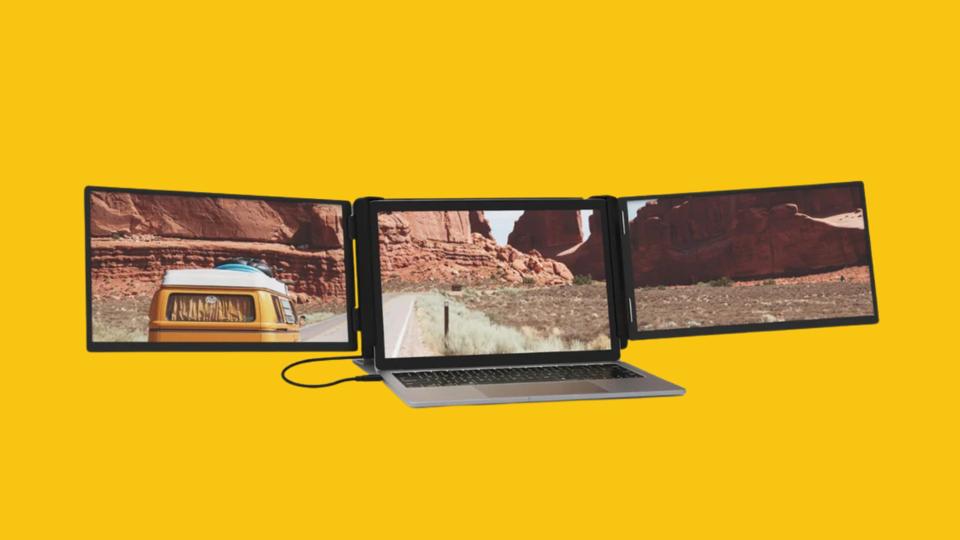
The more and the more varied ports a laptop has, the more readily it can be connected to external hardware like an additional monitor, external speakers, a hard-wired internet connection and more. Look for a laptop with at least two USB-C (or Thunderbolt) ports, as these are becoming the industry standard, but don’t forget about USB-A, which is still quite common. If you plan to connect your laptop to a monitor or portable monitor, make sure you look for an HDMI connection, which will help you add additional displays. And an ethernet port can allow for a direct and highly stable internet connection, which can be a boon for gamers or for streaming video.
Why Trust Forbes Vetted
The Forbes Vetted tech team has published dozens of tech and electronic guides that feature our hands-on testing and research, including plenty of articles about computers.
- This article was written by Forbes Vetted staff writer Steven John, who primarily covers gear and tech. He helped prepare the laptop testing project and personally evaluated many of the computers featured here. John has also recently covered tablets, digital picture frames and 55-inch TVs.
- This story was edited by Forbes Vetted consumer tech and electronics editor Rebecca Isaacs. Isaacs also oversaw the preparation of the laptop testing as well as during the active evaluation. Her recent features include coverage of gaming laptops and writing tablets.
- John spoke to several consumer tech experts as he prepared this article, including Jason Chen, technical director with JarnisTech, Jeremy Rambarran, director of campus and clinical IT services at Touro University and Cameron Prockiw, founder of Nerder.
- We know that new and updated computers are released every year and that older models may go out of stock, so we will frequently revisit this article and make sure it’s updated. This version was published in January 2026 to test the latest models on the market with updated testing methodologies.
