


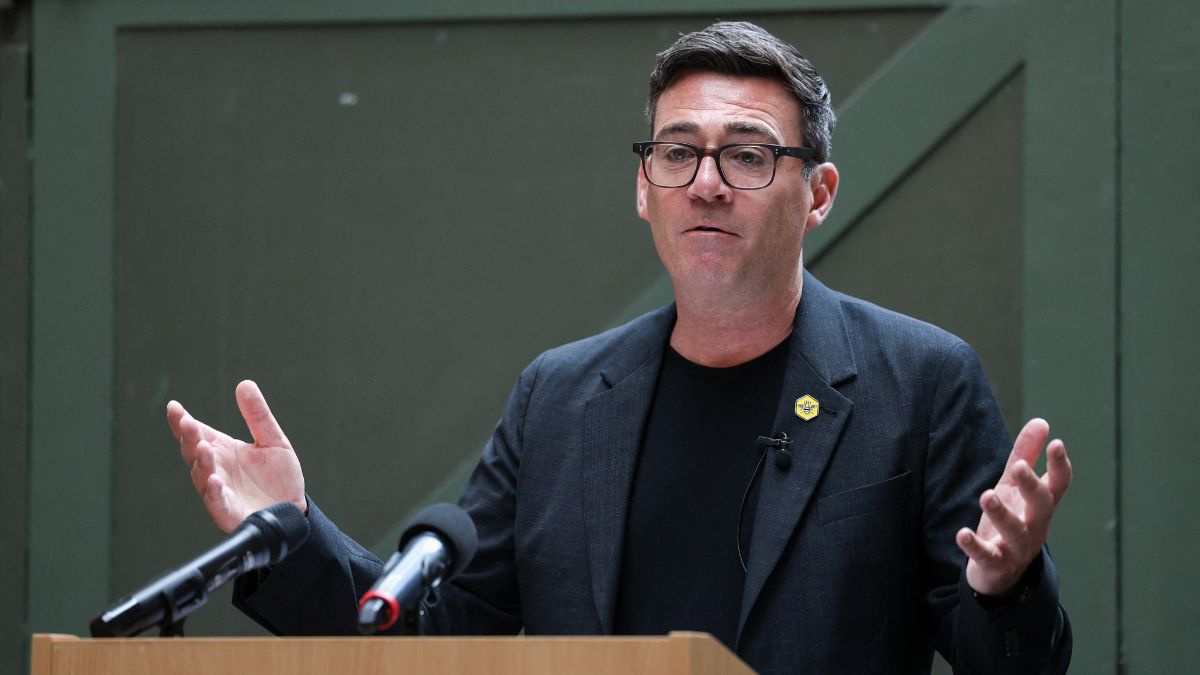
 "Andy Burnham’s reported plan to dismantle UK tech department triggers AI industry backlash – Firstpost")
Plans reportedly being considered by incoming UK Prime Minister Andy Burnham to dissolve the Department for Science, Innovation and Technology (DSIT) have triggered alarm across Britain’s technology sector, with industry leaders warning that the move could weaken the country’s artificial intelligence ambitions at a pivotal moment.
According to reports, Burnham is weighing a government reshuffle that would see DSIT’s responsibilities divided between an expanded Department for Business and Trade and the Department for Culture, Media and Sport (DCMS). The proposed overhaul has prompted an unusually united response from technology lobby groups, entrepreneurs and former government advisers, who argue that the existing department has become central to Britain’s AI strategy.
TechUK and Startup Coalition have jointly urged Burnham to reconsider the proposal, arguing that dismantling DSIT would create uncertainty for one of the country’s fastest-growing industries. In a letter addressed to the incoming prime minister, the organisations said the department provides a single point of contact for researchers, start-ups, investors and policymakers, helping translate government ambitions into practical support for the technology ecosystem.
“DSIT works because it brings researchers, AI practitioners, innovators and policymakers together in one department,” the letter stated, warning that dismantling the ministry would send “a terrible signal” to an industry growing at around 10 per cent annually.
The concerns extend beyond symbolism. Industry representatives fear that redistributing responsibilities across multiple departments could delay or complicate flagship initiatives, including Britain’s AI Security Institute, sovereign AI investments, government digital transformation efforts and publicly funded scientific research programmes.
The UK Tech Cluster Group, which represents regional technology hubs, also warned that restructuring the department at this stage could interrupt momentum as Britain seeks to strengthen its position in the global AI race.
Matt Clifford, who previously advised Downing Street on artificial intelligence, described the reported proposal as “a big mistake”. He argued that with AI increasingly shaping both economic competitiveness and national security, senior officials should remain focused on policy rather than organisational changes.
“Right now is a critical moment for tech as an economic and national security issue,” Clifford said. “Tying up our most senior science and tech officials in a reorg wastes time and energy that’s desperately needed for the actual substance.”
The reported plans have also drawn political criticism. Writing in The Telegraph, shadow technology secretary Julia Lopez accused the incoming government of dismantling a department that had become central to Britain’s technology agenda. Reform UK’s Treasury spokesman Robert Jenrick also criticised Burnham, claiming the move reflected an outdated economic approach.
Although Burnham has yet to publicly confirm the restructuring, reports suggest the changes would coincide with Cabinet appointments, with Jonathan Reynolds expected to oversee an expanded business department and Lucy Powell tipped to lead a larger culture portfolio that could absorb parts of the science and AI brief. At the same time, Burnham is reportedly considering giving an AI minister a seat in Cabinet in an effort to demonstrate that artificial intelligence will remain a government priority.
The debate comes as Britain faces growing pressure to establish itself as a global AI leader. Former Science and Technology Secretary Liz Kendall recently warned that the UK has a narrow window to secure a meaningful position in the rapidly evolving sector. Meanwhile, the launch of Chinese AI company Moonshot’s advanced Kimi K3 model has renewed discussions about the pace of international competition, reinforcing industry concerns that policy disruptions could leave Britain struggling to keep up.
