


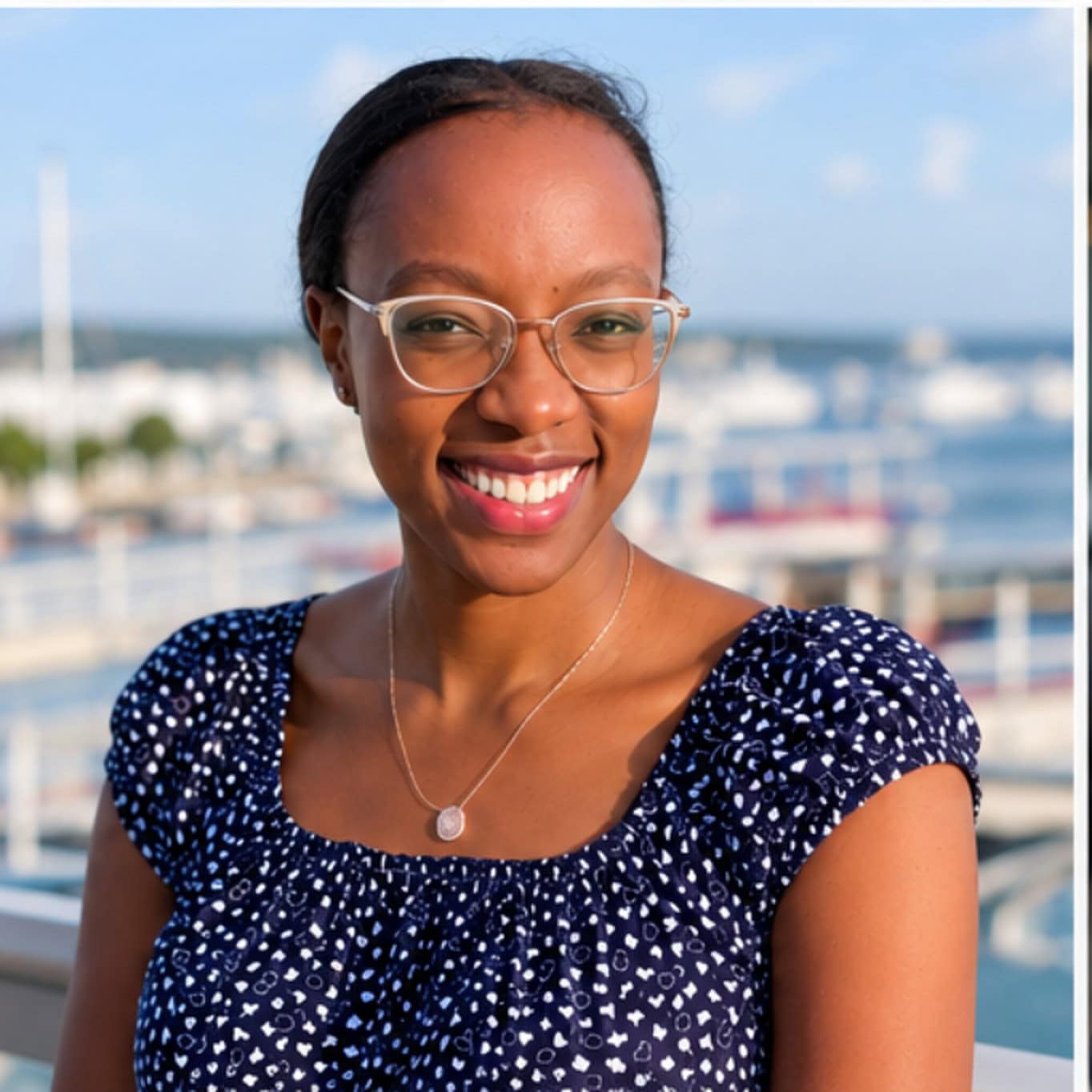
You grew up in Kenya during the rise of M-Pesa, one of the most influential fintech innovations. How did that shape the way you think about financial technology today?
Growing up in Kenya I never saw fintech as a technology trend or an exciting industry to work in. I saw it as something that fundamentally changed people’s everyday lives.
Money paid school fees, supported extended families, kept businesses running and connected communities. Then M-Pesa arrived and transformed something that had always been difficult into something incredibly simple. Suddenly, people could move money instantly, securely and without needing traditional banking infrastructure.
What struck me then and still influences how I think today is that M-Pesa was successful because it solved a genuine human problem and removed a very real friction from people’s lives. That lesson has stayed with me throughout my career, whenever I think about product development or payment infrastructure, I always come back to one question: does this genuinely make life easier for customers? Technology at its best is when people barely notice because everything simply works.
Many people still look to London and Europe as the centre of fintech innovation. Do you think Europe still has lessons to learn from Africa?
Absolutely and I think that’s a conversation the industry is only just beginning to have.
There is still a perception that innovation flows from developed markets into emerging ones, but payments tell a very different story. African fintech was forced to innovate because traditional banking infrastructure wasn’t always accessible. Rather than building around legacy systems, innovators built entirely new ways for people to access financial services.
Europe has exceptional financial institutions, strong regulation and a sophisticated fintech ecosystem, but it can sometimes become focused on adding features rather than removing barriers. In contrast, many African fintech solutions began with a very simple question, how do we solve a real problem for the largest number of people?
As someone who has worked across Kenya, Cyprus and now the UK, I’ve seen how different markets approach the same challenges. The technology may differ, but the customer expectation remains the same and people want financial services they can trust, understand and use with confidence. That’s something every market can learn from.
More from Interviews
- A Chat With Chris Sees, CEO And Co-Founder At Hoxton Mix How The Company Turned One Of Britain’s Least Exciting Businesses Into An AI Company On
- A Chat With Omid Pakseresht, CEO Of SEPANTA, About The Future of AI And Enterprise Innovation
- HealthTech44 Head Judge And Founder Of Archetype MedTech, Dr. Stuart Grant, Tells Us What He’s Looking For In Entrants In 2026
- A Chat With Miao Luo, Director Of Technology Strategy At Qt Group On The State Of OEM And Hardware Startups In The AI Age
- A Chat With Ben Snape, Commercial Director At AI Legaltech Company Litigated.com
- Interview With Séamus Begley, Founder And CEO Of The Studio of Possible On Whether “AI-Powered” Makes Businesses Unique In 2026
- Powering Funds For Investors: Interview With Anders Ramsten, CEO of PowerFunds
- A Conversation With Penelope Sonder, COO Of NALA On How AI Is Quietly Reinventing The Art Industry
You’ve worked across three different financial markets. How has that influenced your approach to building regulated fintech businesses?
Working internationally has taught me that while regulations, banking systems and customer expectations differ, trust is universal.
Every market has its own complexities, but people everywhere expect financial services to be secure, reliable and straightforward. They don’t think about safeguarding requirements, payment rails or compliance frameworks. They simply expect their payment to arrive when it’s supposed to and that’s why I’ve become increasingly passionate about infrastructure. Customers only notice payment systems when they fail, but when they work well, they’re almost invisible and that’s exactly how it should be.
My legal background has also shaped how I think about fintech as regulation is often seen as something that slows innovation, but I see it differently. Strong governance and thoughtful compliance create confidence and confidence is what allows businesses to scale sustainably. Building regulated financial services isn’t simply about launching products quickly, but it’s about creating systems that people and businesses can rely on over the long term.
Artificial intelligence is reshaping financial services. Where do you see the biggest opportunities, and where should the industry be cautious?
AI has already changed the way many of us work and I use it every day to research, organise information and improve productivity. But I don’t believe AI replaces expertise, instead I think it amplifies it.
Those with deep industry knowledge will really see the benefits because they know which questions to ask and how to interpret the answers and that is particularly important in financial services, where regulation, risk and customer trust remain central.
I see enormous opportunities for AI to improve operational efficiency, strengthen compliance, detect fraud and help organisations make better decisions. Those are meaningful advances that can improve both customer experience and business resilience.
However, I also think we need to avoid treating AI as a solution in itself as technology should support better judgement, not replace it. Fintech companies to combine intelligent automation with experienced human decision-making, particularly in highly regulated environments.
Looking ahead, what do you think will define the next decade of fintech?
I think we’re entering a much more mature phase of fintech. The conversation is gradually moving away from disruption for disruption’s sake and towards building resilient financial infrastructure that customers can rely on every single day by removing friction, building trust and solving meaningful problems.
Cross-border payments will continue to evolve, AI will become more deeply embedded in financial services and collaboration between fintechs and traditional financial institutions will become increasingly important.
But if there’s one lesson I’ve carried with me from watching M-Pesa transform everyday life in Kenya, is that that great financial innovation is about making people’s lives easier. Whilst technology changes quickly, human needs don’t. The fintech companies that keep that principle at the centre of everything they build will be the ones that define the next decade.
